Top Cybersecurity Certifications in 2026 (Roadmap + Salary + Difficulty)

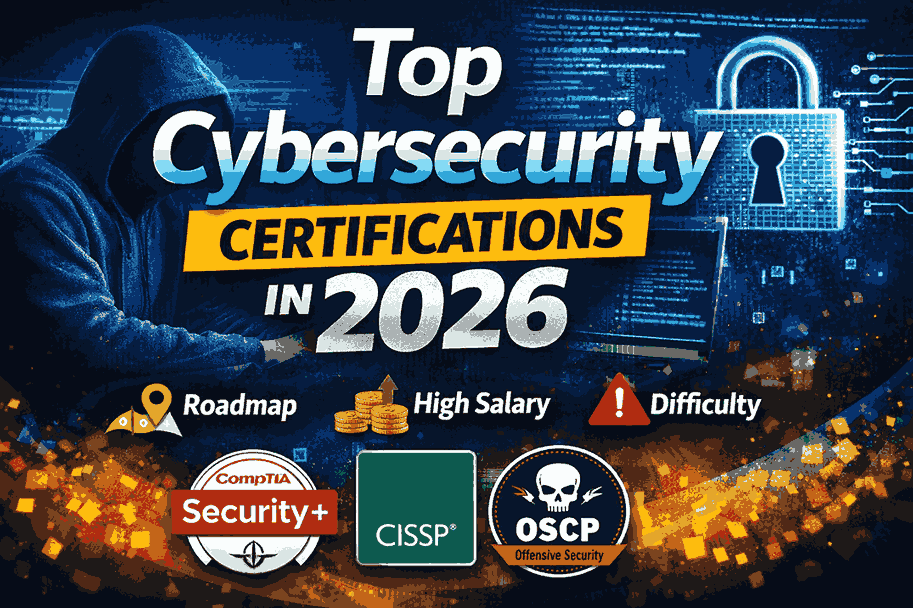
Top Cybersecurity Certifications in 2026: Roadmap, Salary & Difficulty
Cybersecurity certifications play a major role in validating skills, increasing salary potential, and breaking into the security industry. However, choosing the wrong certification can cost you both time and money.
In this guide, we break down the top cybersecurity certifications in 2026, organized by career level, difficulty, and salary impact — along with a clear roadmap to help you decide which certification to pursue next.
Cybersecurity Certification Roadmap (2026)
Cybersecurity certifications should be pursued in stages. Jumping into advanced certifications too early often leads to frustration and failure.
Recommended path:
- Beginner → Foundational knowledge
- Intermediate → Role-specific skills
- Advanced → Leadership and architecture
- Specialist → High-demand niches
Beginner Cybersecurity Certifications
Best for: Students, career switchers, IT beginners
CompTIA Security+
CompTIA Security+ remains one of the most popular entry-level cybersecurity certifications. It covers core concepts such as network security, threats, cryptography, and risk management.
- Difficulty: ★★☆☆☆
- Prerequisites: Basic networking knowledge
- Average Salary Impact: $65,000 – $90,000
Security+ is often required for government and defense-related roles and is an excellent first certification for anyone entering cybersecurity.
ISC2 Certified in Cybersecurity (CC)
The ISC2 Certified in Cybersecurity (CC) certification is designed for absolute beginners. It introduces essential security concepts without overwhelming technical depth.
- Difficulty: ★☆☆☆☆
- Average Salary Impact: $60,000 – $80,000
Intermediate Cybersecurity Certifications
Best for: Professionals with 1–3 years of experience
Certified Ethical Hacker (CEH)
CEH focuses on offensive security techniques such as reconnaissance, exploitation, and attack methodologies. While it is not deeply hands-on, it remains popular with HR and recruiters.
- Difficulty: ★★★☆☆
- Average Salary Impact: $85,000 – $115,000
CompTIA CySA+
CySA+ is designed for blue-team roles such as SOC analysts and incident responders. It emphasizes threat detection, analysis, and response techniques.
- Difficulty: ★★★☆☆
- Average Salary Impact: $90,000 – $120,000
Advanced Cybersecurity Certifications
Best for: Professionals with 5+ years of experience
CISSP (Certified Information Systems Security Professional)
CISSP is widely regarded as the gold standard for senior cybersecurity roles. It focuses on security architecture, governance, and risk management.
- Difficulty: ★★★★☆
- Average Salary Impact: $120,000 – $170,000+
CISM (Certified Information Security Manager)
CISM is ideal for professionals aiming for management and GRC-focused positions. It emphasizes governance, compliance, and organizational security strategy.
Specialist Certifications in High Demand (2026)
Cloud Security Certifications
- AWS Certified Security – Specialty
- CCSP (Certified Cloud Security Professional)
Average Salary: $120,000 – $160,000+
Offensive Security Certifications
- OSCP (Offensive Security Certified Professional)
- PNPT (Practical Network Penetration Tester)
These certifications are extremely hands-on and highly respected but require strong technical foundations.
Certification Comparison Table
| Certification | Level | Difficulty | Avg Salary |
|---|---|---|---|
| Security+ | Beginner | ★★☆☆☆ | $65k – $90k |
| CEH | Intermediate | ★★★☆☆ | $85k – $115k |
| CySA+ | Intermediate | ★★★☆☆ | $90k – $120k |
| CISSP | Advanced | ★★★★☆ | $120k – $170k+ |
| OSCP | Specialist | ★★★★★ | $120k – $160k |
Which Cybersecurity Certification Should You Choose?
- Beginners: Security+ → CySA+ → CISSP
- Pentesting: Security+ → CEH → OSCP
- Cloud Security: Security+ → CCSP / AWS Security
Common Mistakes to Avoid
- Pursuing certifications without hands-on labs
- Attempting CISSP too early
- Ignoring networking and operating system fundamentals
- Overpaying for bootcamps instead of self-study
Final Thoughts
Certifications do not replace skills — they validate them. The most successful cybersecurity professionals combine certifications with hands-on practice, labs, and real-world projects.
—
Related Article
Your Opinion
Trending
Recently Posted

Deepfake Scams Are Now a Real Cybersecurity Crisis — Here’s How to Stop Them
Cybersecurity for Beginners: Complete Roadmap from Zero to Job
Top Cybersecurity Certifications in 2026 (Roadmap + Salary + Difficulty)